
Difference Between Local SEO and International SEO 2026
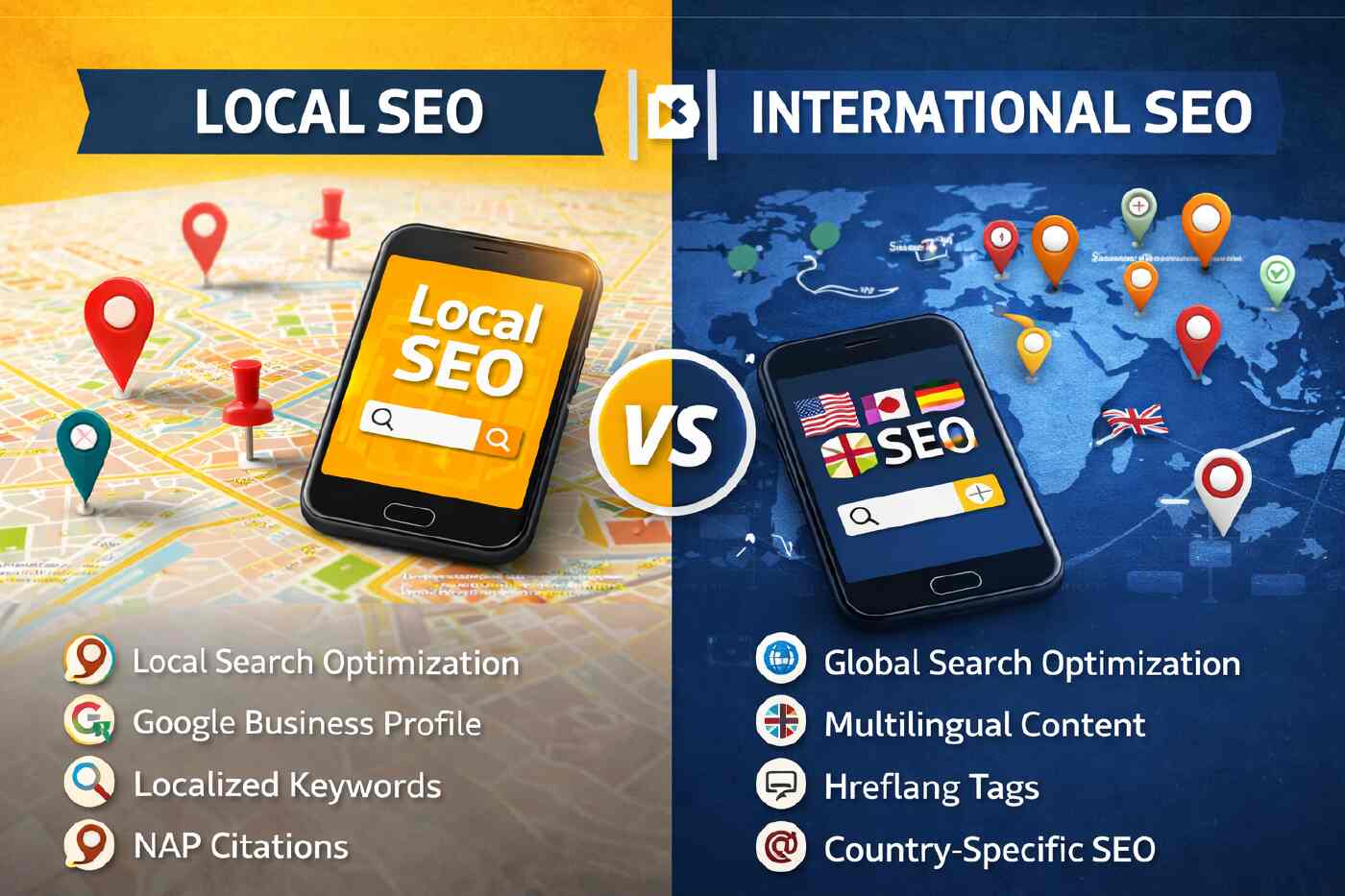
SEO strategies vary widely depending on whether a business targets local markets or global audiences. Understanding the difference between local SEO and international SEO is critical for aligning your SEO strategy for business growth with your objectives. While local SEO focuses on boosting organic search visibility locally and driving foot traffic, international SEO aims at reaching global audiences, optimizing for multiple languages, regions, and search engines.
Businesses that operate in a single region should prioritize local SEO optimization, including Google My Business optimization, NAP consistency, local citations, and location-based keyword targeting. These strategies ensure that your brand appears in local search packs, attracts nearby customers, and builds a strong presence in your community. On the other hand, companies looking for global expansion SEO need to focus on international SEO optimization, such as multilingual content SEO, hreflang tag implementation, regional SEO targeting, and global keyword research to reach audiences across multiple countries effectively.
Local SEO: Optimizing for Your Community
Local SEO is about tailoring your online presence to attract customers in a specific geographic area. Key tactics include optimizing Google Business Profile, creating localized content, managing reviews and ratings, and ensuring citations and NAP consistency. Businesses like cafes, dental clinics, or repair services rely heavily on hyper-local keyword research and near me search optimization to generate leads.
For example, a small bakery in Chicago might focus on keywords like “best bakery near me” or “Chicago cupcakes” and ensure its listing appears in local directories. Engaging the community through local content and customer reviews improves visibility in Google Maps results and the main search results. Local backlinks, including partnerships with nearby businesses, also enhance community-focused SEO.
Benefits of local SEO: improved local search traffic, higher foot traffic, stronger customer engagement, and measurable local SEO ROI.
International SEO: Scaling Across Borders
International SEO targets audiences beyond a single location. Companies selling products globally, such as e-commerce stores or multinational enterprises, need a global SEO strategy. Core tactics include multilingual SEO, regional keyword research, culturally adapted content, hreflang tag implementation, and geo-targeting for SEO.
For instance, an online clothing brand expanding to Europe must optimize its website for multiple languages, adjust pricing and currency, and localize content according to cultural norms. International backlink building and SEO for multiple countries strengthen global brand authority and improve rankings in country-specific search engines like Google UK, Bing Australia, or Yahoo Japan.
Benefits of international SEO: increased global reach, higher brand awareness worldwide, better international traffic growth, and ROI from multiple markets.
Key Differences Between Local and International SEO
The SEO strategy comparison highlights several differences:
- Target Audience: Local SEO targets regions or communities, while international SEO targets countries or continents.
- Keyword Strategy: Local SEO relies on geo-specific keywords, while international SEO uses language-targeted, globally relevant keywords.
- Content Localization: Local content is tailored to a single area, whereas international content requires translation, cultural adaptation, and multilingual SEO architecture.
- Technical SEO: Local SEO uses local schema markup, citations, and location metadata, while international SEO requires hreflang implementation, multilingual site structure, and geo-targeting best practices.
- Investment & ROI: Local SEO is usually more cost-effective and quicker to show results, while international SEO requires greater resources, planning, and continuous optimization.
Some businesses adopt a hybrid SEO approach, combining local optimization for primary markets and international strategies for expanding globally. This ensures both community engagement and global visibility.
Example Scenario: Local vs International SEO
Imagine a restaurant chain:
- Local SEO: Each branch optimizes its own Google My Business, location pages, and localized content to attract nearby customers.
- International SEO: The parent company expands online to other countries. It must implement multilingual content, regional search optimization, and global backlink strategies to rank internationally.
This scenario illustrates that while local SEO drives immediate customer engagement, international SEO builds global brand authority and scalability.
Technical Considerations
Local SEO technical setup includes schema markup for local business, ensuring consistent NAP citations, and optimizing for local search packs.
International SEO technical setup requires:
- Hreflang implementation
- Multilingual SEO architecture
- Country-specific indexing
- International competitor analysis
Proper configuration ensures search engines serve the right content to the right region and prevents duplicate content issues.
Benefits & Outcomes
- Local SEO: increases foot traffic, improves local rankings, strengthens community presence, and enhances ROI from nearby customers.
- International SEO: expands global audience reach, improves brand awareness, increases international revenue, and builds long-term authority in multiple markets.
Choosing the right approach depends on business goals, resources, and target audience regions.
FAQs: Local vs International SEO
1. When should I choose local SEO over international SEO?
If your business operates primarily in a single city or region and relies on nearby customers, focus on local SEO.
2. Can a business implement both strategies?
Yes, a hybrid SEO approach works well for global brands with local branches, combining regional optimization and global reach strategies.
3. What is hreflang, and why is it important?
Hreflang tags tell search engines which language and country version of a page to serve, preventing duplicate content issues in international SEO.
4. How do keyword strategies differ?
Local SEO uses geo-specific keywords, while international SEO targets language-specific, culturally relevant keywords across multiple regions.
5. Which SEO shows ROI faster?
Local SEO usually provides faster ROI due to focused targeting and less competition, while international SEO is a long-term investment for global growth.