
Content Marketing vs Digital Marketing: Strategy & Outcomes
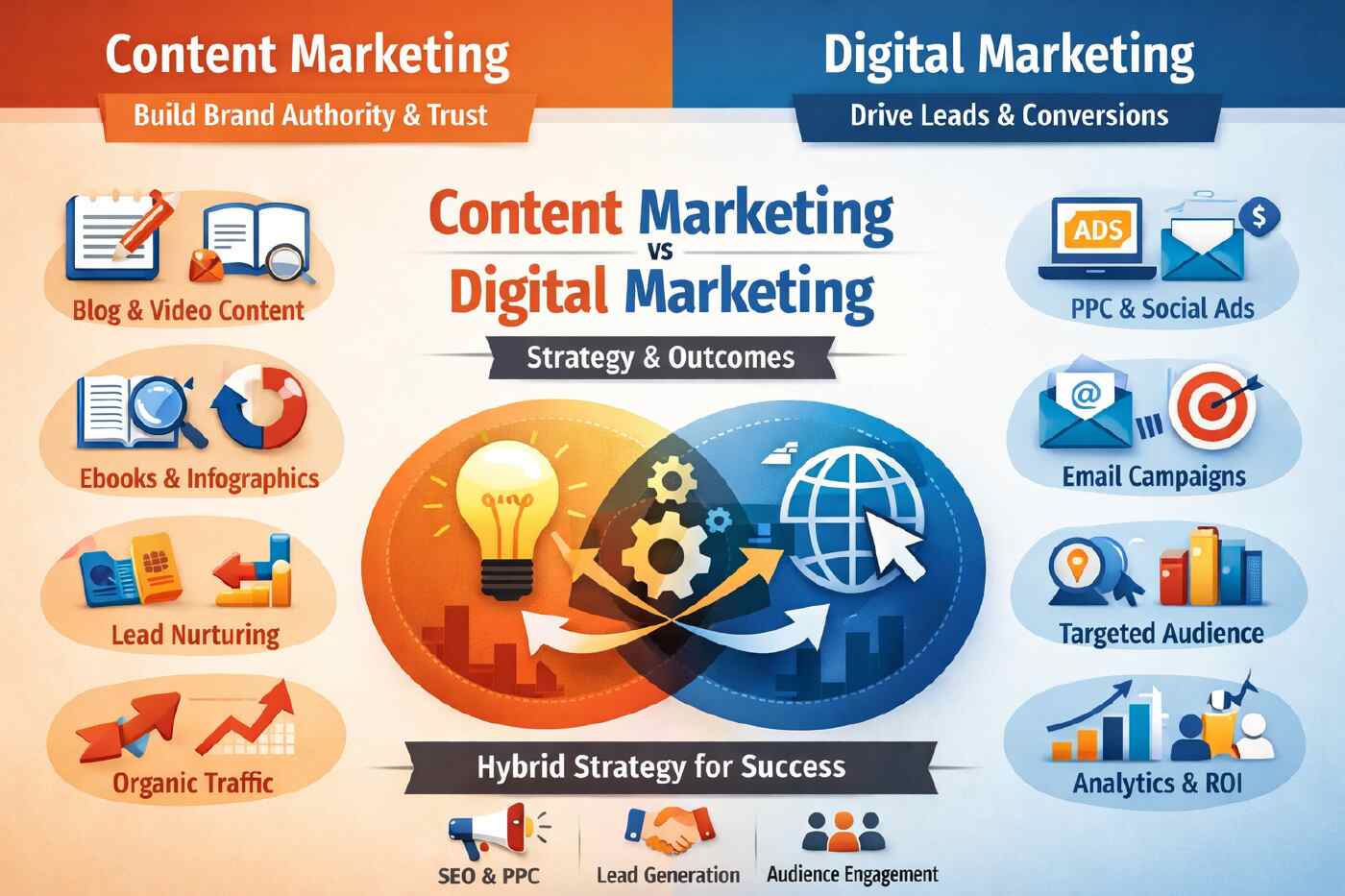
In today’s competitive business landscape, choosing the right marketing strategy is critical. Businesses often struggle to understand the differences between content marketing and digital marketing, yet these strategies complement each other when used effectively. This guide explores both approaches, compares their tactics, and provides insights to align marketing goals and achieve measurable outcomes.
A marketing strategy defines how a business communicates with its audience, promotes products, and achieves growth. Successful strategies align marketing objectives with desired business outcomes, addressing audience needs and leveraging the right channels.
Two popular approaches dominate today’s digital ecosystem: content marketing and digital marketing. Understanding their roles ensures efficient decision-making and maximizes ROI.
2. What is Content Marketing?
Content marketing is the practice of creating and distributing valuable, relevant, and consistent content to attract, engage, and retain a target audience.
Key components include:
- Content creation and distribution across blogs, videos, infographics, podcasts, and eBooks
- Educational and entertaining marketing content that addresses customer pain points
- SEO-optimized content marketing to drive organic traffic and enhance search engine visibility
- Thought leadership content to build brand authority and trust
- Nurture leads with content throughout the customer journey
Benefits of Content Marketing:
- Organic traffic growth through search and social sharing
- Loyal audience building and long-term relationship development
- Cost-effective strategy for brand visibility and lead generation
3. What is Digital Marketing?
Digital marketing encompasses all online marketing tactics that leverage digital channels and technologies to reach audiences. Unlike content marketing, it focuses on direct promotion and lead generation using measurable methods.
Digital marketing tactics include:
- Search engine optimization (SEO) and pay-per-click (PPC) advertising
- Social media marketing and advertising (SMM)
- Email campaigns, mobile marketing, and website promotion
- Digital advertising methods targeting demographics and behavior
- Marketing analytics and tracking to enable data-driven decisions
Benefits of Digital Marketing:
- Immediate interaction with target audiences
- Measurable conversion tracking and ROI
- Scalable campaigns with flexible digital strategies
- Personalized customer experiences and real-time engagement
4. Content Marketing vs Digital Marketing: Key Differences
| Feature | Content Marketing | Digital Marketing |
|---|---|---|
| Purpose | Build brand authority and trust | Generate leads and conversions |
| Approach | Long-term, relationship building | Short-term, performance-driven |
| Channels | Blogs, videos, podcasts, infographics | SEO, PPC, email, social ads |
| Cost | Cost-effective, organic focus | Can be paid-heavy, faster ROI |
| Outcomes | Loyal audience, brand visibility | Measurable results, conversions |
| Integration | Fuels SEO and digital campaigns | Uses content as supporting tool |
Takeaway: Both approaches are complementary. Content fuels digital campaigns, while digital marketing amplifies content for organic and paid reach.
5. Choosing the Right Marketing Strategy
Decision-making requires aligning marketing goals and outcomes with audience needs:
- Define business marketing objectives: Are you aiming for brand awareness or immediate lead generation?
- Understand target audience: Map the buyer journey and identify pain points.
- Select appropriate channels: Leverage blogs, social media, email, and PPC where your audience is active.
- Combine strategies: Use a hybrid content + digital marketing strategy for full-funnel impact.
6. Full-Funnel Marketing and Integrated Approaches
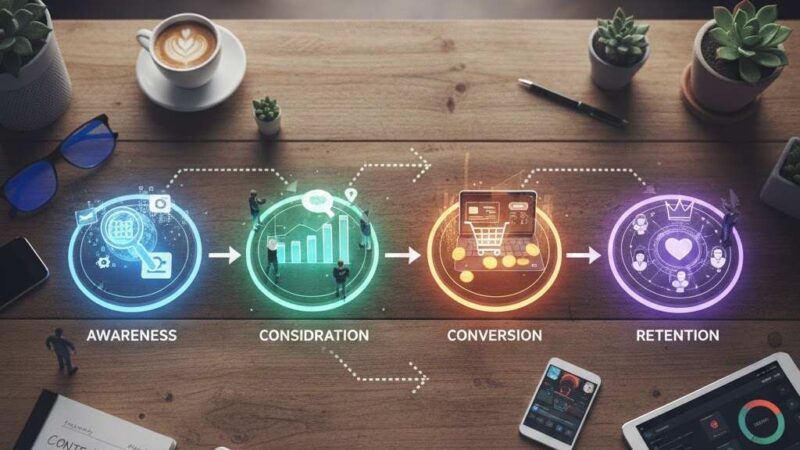
A full-funnel marketing strategy integrates content and digital tactics to address every stage of the buyer journey:
- Awareness: Blog posts, social media content, SEO optimization
- Consideration: Case studies, videos, eBooks, email campaigns
- Decision: PPC campaigns, retargeting ads, interactive landing pages
- Retention: Gated content, personalized engagement, newsletters
Integrated marketing approaches ensure sustainable marketing growth, combining long-term content authority with measurable digital outcomes.
7. Marketing Channels and Tactics
Content marketing channels:
- Blog marketing, video marketing, infographics, podcasts
- Gated content for lead capture
- Interactive and user-generated content
Digital marketing channels:
- SEO, SEM, PPC, social media ads
- Email marketing and mobile app campaigns
- Paid vs organic distribution
Hybrid tactics: Combining owned, earned, and paid media increases reach, engagement, and conversion opportunities.
8. Measuring Marketing Results and ROI
Both strategies rely on data-driven analytics for performance tracking:
- Content metrics: Organic traffic, social shares, engagement rates, lead quality
- Digital metrics: Conversion rates, click-through rates, cost per acquisition (CPA)
- Integrated approach: Tracks brand visibility, audience growth, and ROI across channels
Optimizing campaigns based on analytics ensures scalable, cost-effective marketing solutions.
9. FAQs
Q1: Can content marketing work without digital marketing?
Yes, but results are slower. Digital channels amplify content reach and conversions.
Q2: Which strategy is better for lead generation?
Digital marketing provides measurable leads, but content marketing nurtures prospects for higher-quality conversions.
Q3: How do I combine content and digital strategies?
Use content to fuel SEO, social media, and email campaigns. Run paid ads to amplify high-performing content.
Q4: Is content marketing cost-effective?
Absolutely. While it requires consistent production, it builds long-term trust and organic traffic.
Q5: How do I track ROI for integrated strategies?
Use analytics tools to monitor traffic, engagement, conversions, and customer lifetime value across all channels.
✅ Conclusion:
The choice between content marketing vs digital marketing depends on business goals, audience needs, and desired outcomes. A hybrid approach integrating content creation with digital campaigns provides full-funnel coverage, measurable results, and sustainable growth. Align strategies with your objectives, leverage the right channels, and continuously optimize for maximum ROI.

This good article offers helpful insights. The
site is useful and clear.