
10 Blogging Mistakes to Avoid in 2026 (And How to Fix Them)
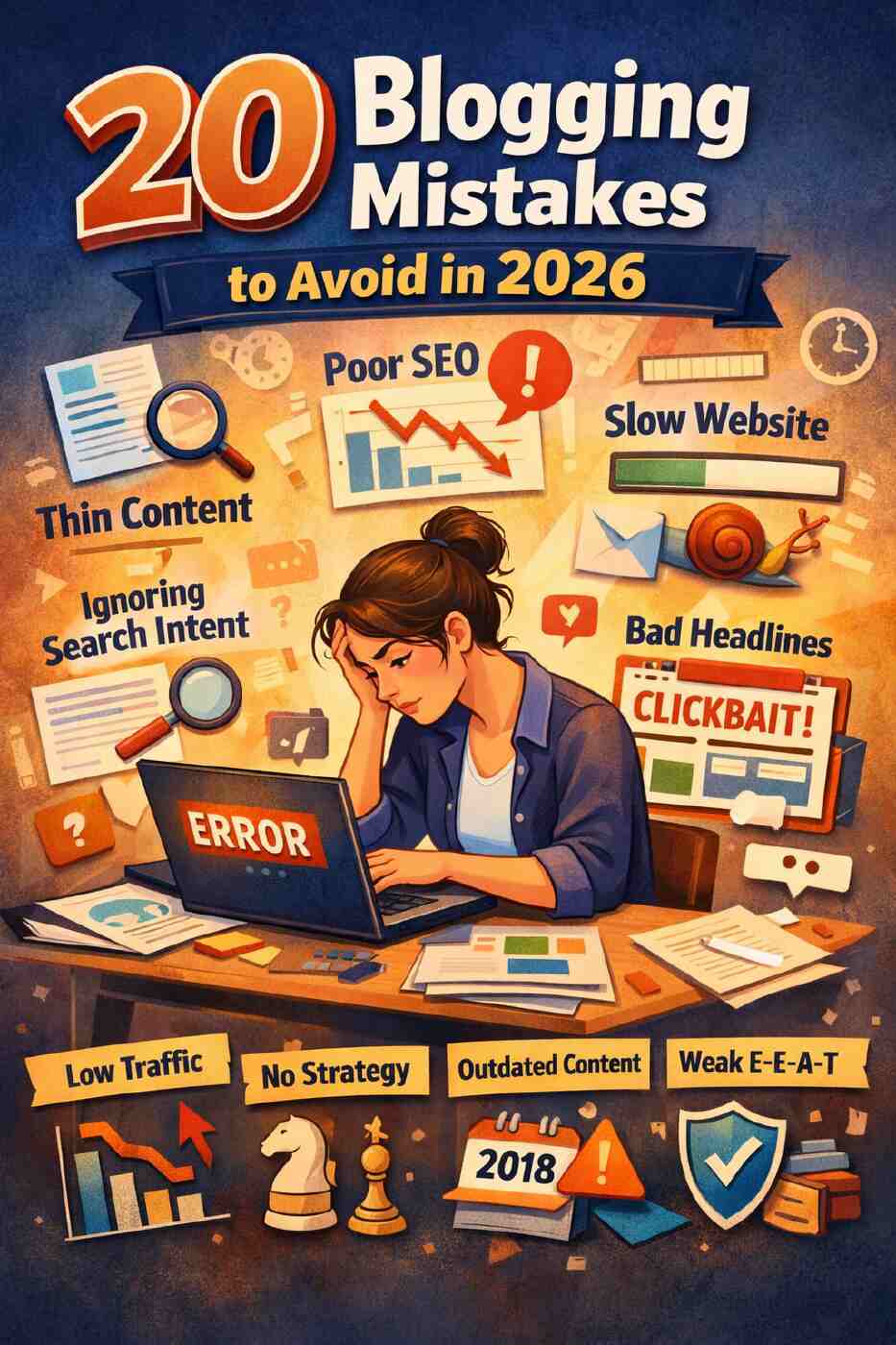
Blogging in 2026 is no longer about publishing content quickly or targeting a single keyword. Search engines now evaluate topic depth, semantic relevance, and user satisfaction. Many blogs fail not because blogging is dead, but because bloggers continue to repeat the same mistakes that block growth, traffic, and authority. Below are the most critical blogging mistakes bloggers should avoid in 2026, explained in depth with clear, natural solutions inside each section.
1. Ignoring Search Intent and Real User Queries
One of the most damaging blogging mistakes in 2026 is ignoring search intent and writing content without understanding what users actually want. Many bloggers still choose a keyword, write a generic article, and assume Google will rank it. However, modern search engines focus on why a user searches, not just what they type. For example, if a user searches “blogging mistakes to avoid,” they expect a clear list of common blogging errors with practical explanations—not storytelling or unrelated theory. When your content does not align with user intent, it results in high bounce rates, low engagement, and poor rankings. This is one of the main reasons why most blogs fail today.
The solution is to analyze search results before writing. Study the top-ranking pages, review “People Also Ask” questions, and identify whether users want step-by-step guidance, comparisons, or explanations. Structure your content to directly answer those questions early in the article. When you match content format, depth, and tone with user intent, search engines recognize your page as helpful, increasing visibility and organic traffic naturally.
2. Skipping Semantic Keyword Research
Another common blogging error is relying on one primary keyword and ignoring semantic SEO. In 2026, Google understands relationships between terms such as blogging mistakes to avoid, common blogging errors, why blogs fail, and SEO blogging mistakes. Bloggers who fail to include these related concepts create shallow content that lacks topical authority. Keyword stuffing no longer works and often harms readability and trust.
The correct approach is to perform semantic keyword research before writing. Instead of repeating the same phrase, identify related terms, variations, and user questions connected to the main topic. Then, naturally integrate them into headings, explanations, and examples. This improves topic coverage, helps search engines understand context, and makes content more useful for readers. When semantic keywords appear naturally within valuable explanations, rankings improve without sacrificing readability.
3. Publishing Thin Content Without Depth
Thin content remains one of the biggest reasons blogs struggle to rank in competitive niches. Many bloggers publish short articles that briefly touch on a topic but fail to fully explain it. In 2026, search engines prioritize depth, clarity, and usefulness. If your content does not solve the reader’s problem completely, users will leave and choose a better resource. This sends negative engagement signals and reduces trust.
The solution is not to write longer content unnecessarily, but to write complete content. Each section should explain the problem, why it matters, and how to fix it. Adding examples, explanations, and context naturally increases word count while improving value. When readers feel their question has been fully answered, they stay longer, engage more, and trust your blog—exactly what search engines want to see.
4. Writing for Search Engines Instead of Humans
Many bloggers still write content that sounds robotic, repetitive, and unnatural because they focus too much on SEO rules instead of readability. This is a classic SEO blogging mistake that reduces user satisfaction. Even if such content ranks temporarily, it rarely performs well long-term because readers do not enjoy reading it. In 2026, Google measures real user behavior, not just keyword presence.
The solution is to write for humans first and optimize later. Use clear language, active voice, and a natural flow. Once the article is complete, review it to ensure headings, internal links, and semantic terms are included logically. When content feels natural and helpful, SEO improvements happen organically without harming readability.
5. Poor Content Structure and Lack of Skimmability
A major but often ignored blogging mistake is poor content structure. Many users skim content before reading, especially on mobile devices. Long blocks of text without headings, bullet points, or visual separation overwhelm readers and reduce engagement. Even high-quality information can fail if it is difficult to scan.
The solution is to structure content clearly using descriptive subheadings, short paragraphs, and logical sections. Each heading should communicate value and guide the reader through the article. Skimmable content improves user experience, increases time on page, and helps search engines understand content hierarchy, resulting in better rankings.
6. What role does content promotion play in avoiding blogging mistakes?
Writing excellent content is only half the job. Without sharing posts on social media, newsletters, and relevant communities, even high-quality blogs will fail to reach their audience. A content promotion plan increases visibility, engagement, and referral traffic.
7. Should I focus on evergreen content or trending topics?
Evergreen content — topics that remain relevant over time — builds long-term traffic and authority, whereas trending topics often spike and then fade. A smart blog balances both, but prioritizes evergreen topics to avoid traffic stagnation.
9. How do I ensure my blog content stays relevant over time?
Regularly audit and update old posts with fresh data, better examples, improved SEO optimization, and internal links. This signals relevance to users and search engines, boosting rankings and engagement.
10. Can poor blog design and UX hurt my rankings?
Absolutely. A cluttered layout, slow loading speed, or mobile-unfriendly display increases bounce rates and reduces session time, both of which negatively impact search performance. Prioritize a clean, responsive design.



It’s really a nice blog.