If you’ve ever felt like you’re throwing money at ads and getting nothing back, you’re likely suffering from a “stage mismatch.”
Marketing isn’t just about shouting “Buy my stuff!” at strangers. It’s a relationship. You wouldn’t ask someone to marry you on a first date, right? Yet, businesses do the equivalent of that every day when they try to sell to people who don’t even know who they are yet.
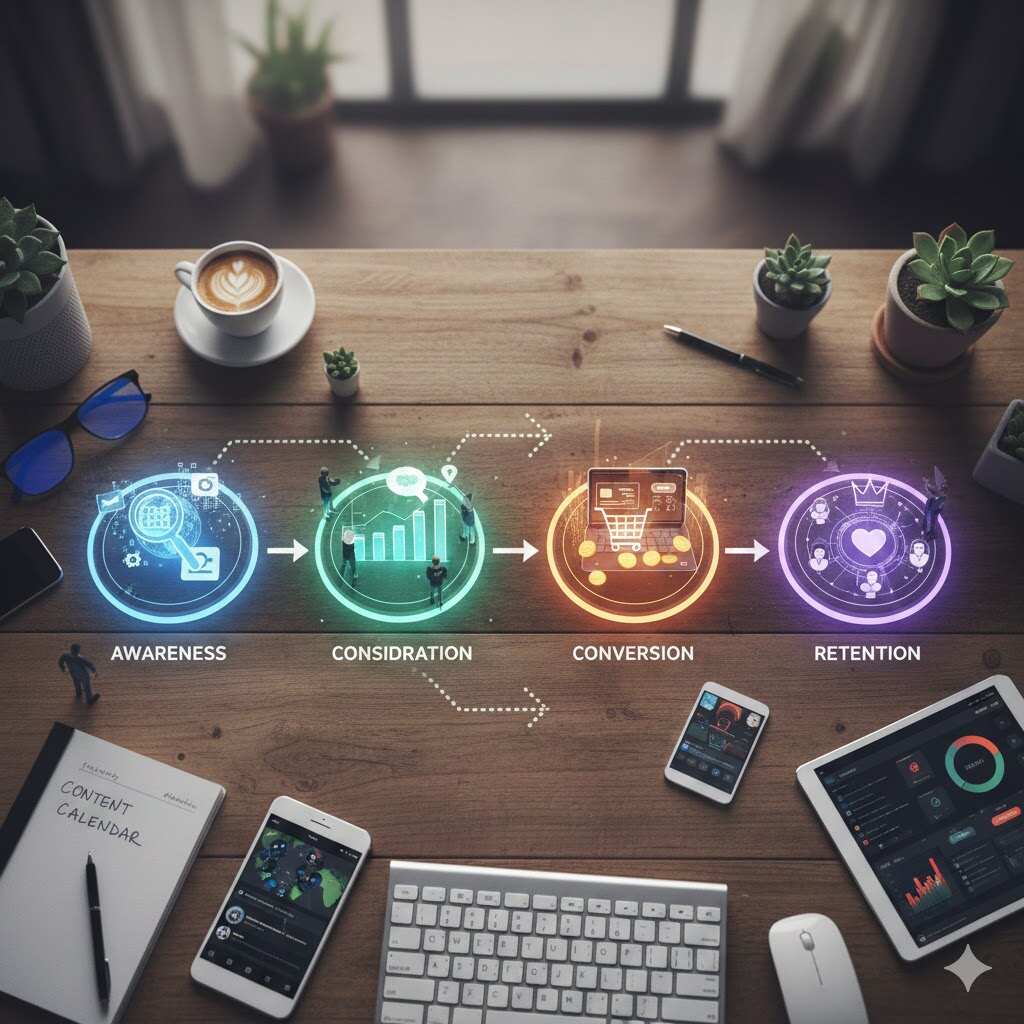
To build a brand that actually lasts, you need to master the four stages of the marketing lifecycle. Let’s break them down—without the corporate jargon.
1. The Awareness Stage: The “Who Are You?” Phase
Think of this as the “handshake” phase. At this point, your potential customer has a problem, but they don’t know you have the solution. In fact, they might not even know your name.
The Goal: Stop being a stranger. The Vibe: Helpful, not salesy.
In this stage, you aren’t selling a product; you’re selling answers. If someone searches for “Why is my coffee bitter?” and you sell high-end coffee beans, don’t just tell them to buy your beans. Write a guide on water temperature and grind size.
- What to create: Quick-tip videos (Reels/TikTok), helpful blog posts, and infographics.
- The Pro Move: Focus on “Problem-Aware” keywords. Answer the questions people are actually typing into Google at 2:00 AM.
2. The Consideration Stage: The “Window Shopping” Phase
Now they know who you are. They’ve read your blog or seen your video. Now, they’re doing their homework. They are looking at you, then looking at your competitor, then looking back at you.
The Goal: Prove you’re the expert. The Vibe: “I’ve got the receipts.”
This is where E-E-A-T (Experience, Expertise, Authoritativeness, Trustworthiness) really kicks in. People want to see that you’ve done this before. They want to see case studies, “This vs. That” comparisons, and deep dives.
- What to create: Comparison guides (e.g., “Our Product vs. The Other Guys”), detailed webinars, and honest reviews.
- The Pro Move: Don’t be afraid to say who your product isn’t for. It builds massive trust.
3. The Conversion Stage: The “Moment of Truth”
This is the “put up or shut up” moment. The customer is standing at the checkout line with their credit card in hand. Most people think the work is done here, but this is actually where you lose the most people due to “friction.”
The Goal: Make it impossible to say no. The Vibe: Frictionless and reassuring.
If your checkout process is glitchy or you don’t show your return policy clearly, they will leave. You need to address their final fears: “Will this work?” “Is my data safe?” “What if I hate it?”
- What to create: Clear pricing pages, glowing testimonials, and strong “Money-back guarantees.”
- The Pro Move: Use “social proof.” Seeing that 500 other people bought this in the last week is often the final nudge a human needs to click “Buy.”
4. The Retention Stage: The “Long-Term Relationship” Phase
Most businesses are obsessed with getting new customers, but the real money is made by keeping the ones you already have. It is significantly cheaper to sell to a happy customer than to find a brand-new one.
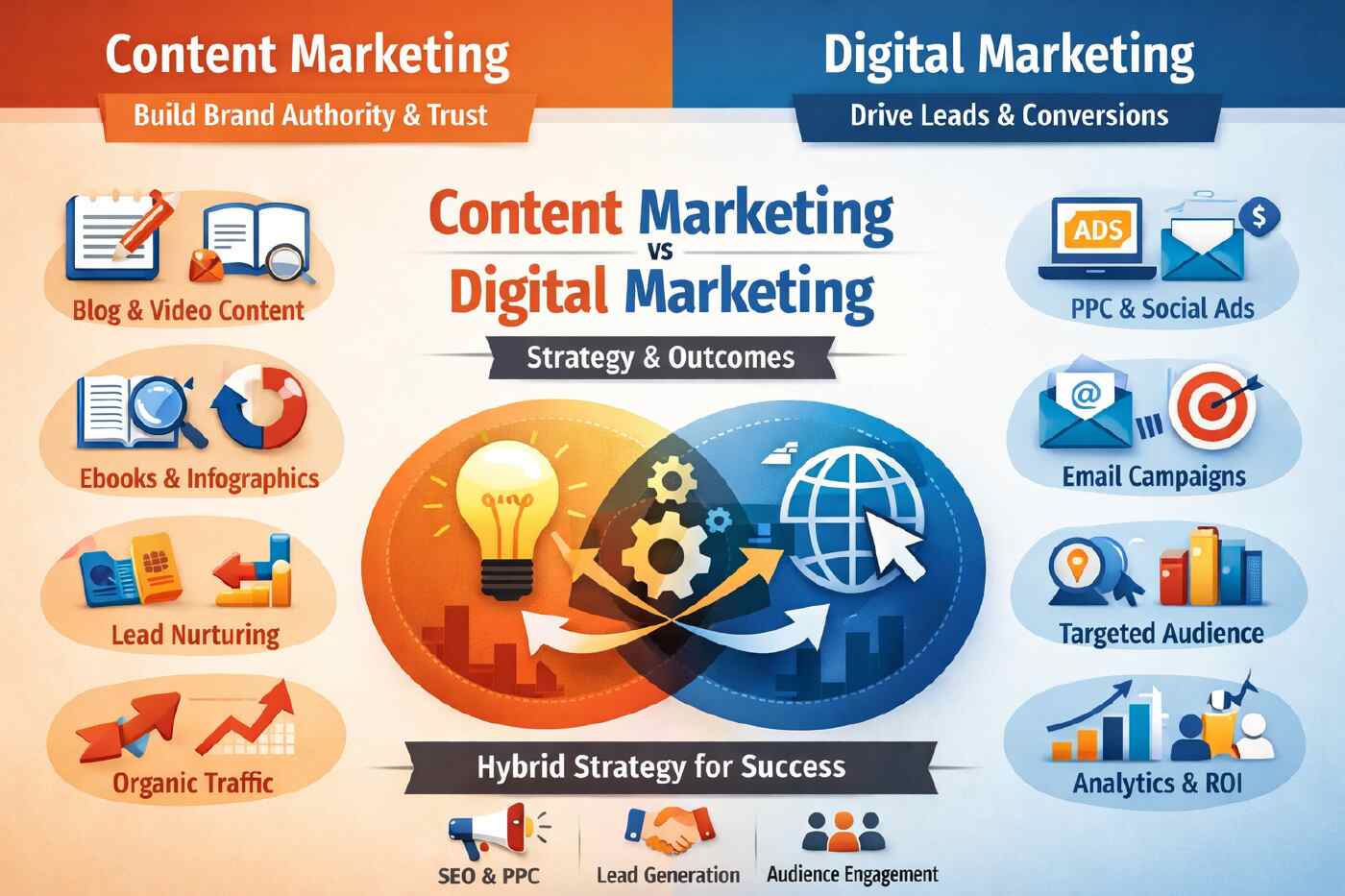
Read more about Content Marketing vs Digital Marketing: Strategy & Outcomes
The Goal: Turn a buyer into a fan. The Vibe: Gratitude and community.
This is where you turn a transaction into a transformation. If you sell a software, send them a “How-to” video a week later. If you sell clothes, send them a style guide.
- What to create: Exclusive newsletters, loyalty rewards, and “checking in” emails.
- The Pro Move: Ask for feedback. When a customer feels heard, they become an advocate who does your marketing for you.
The Bottom Line
Marketing isn’t a single event; it’s a sequence.
- Awareness: They see you.
- Consideration: They think about you.
- Conversion: They choose you.
- Retention: They stay with you.
If you try to skip a step, you’ll likely lose the lead. Align your content with where the human is in their journey, and the “selling” part becomes a lot easier.