
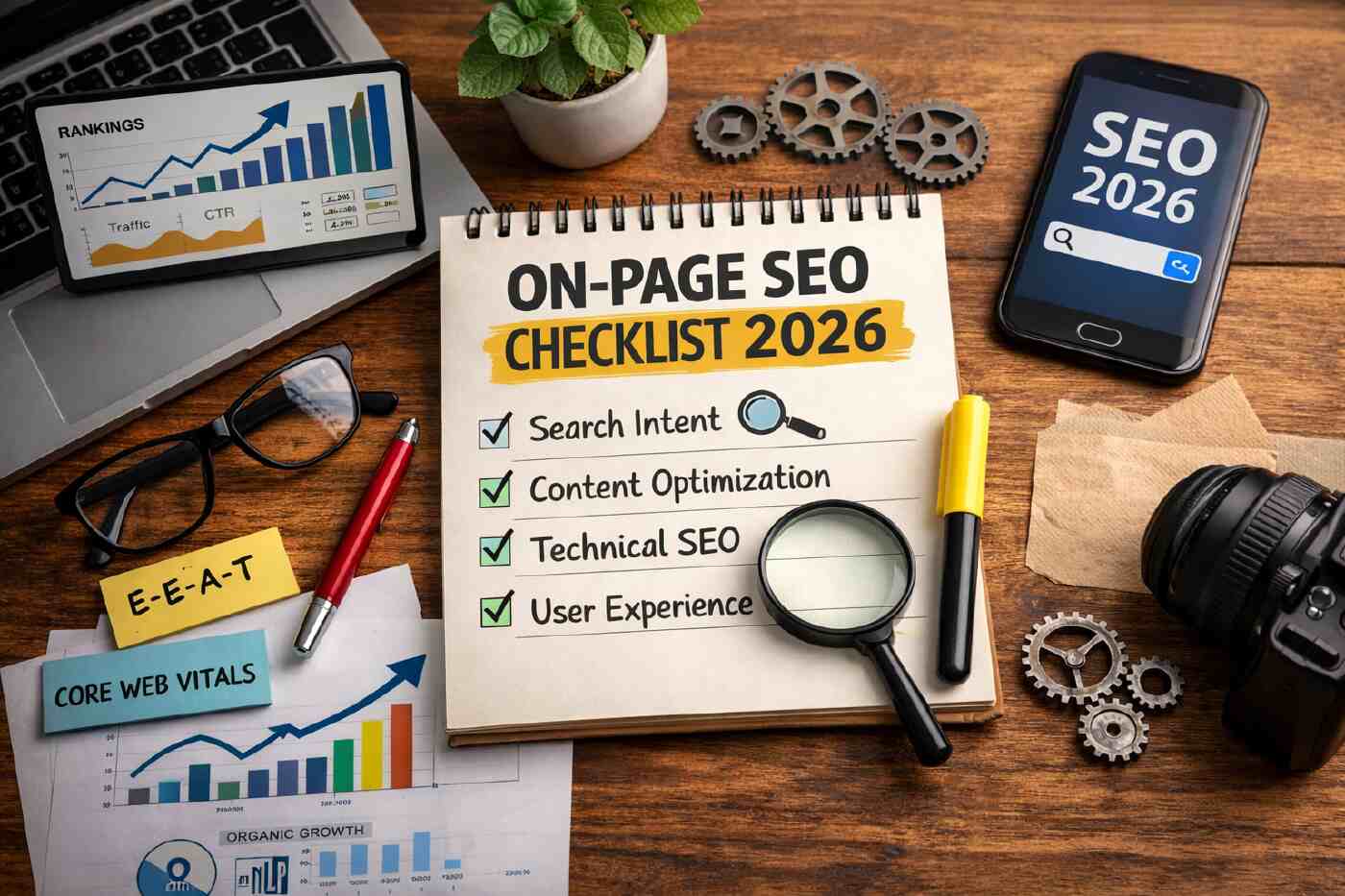
On-page SEO in 2026 is no longer about inserting keywords and hoping for rankings. Search engines now evaluate how well a page satisfies user intent, how clearly it communicates topic meaning, and how effectively it delivers value through content experience. Google’s modern search engine algorithms focus on semantic understanding, entity relationships, and real engagement signals rather than surface-level optimization.
A strong on-page SEO strategy works like a system. It connects search demand analysis, content quality, technical stability, and user experience into a single workflow. When these elements align, websites achieve consistent organic search growth, better search visibility optimization, and long-term Google ranking improvement. This guide explains how on-page SEO actually works in 2026 and provides a practical checklist you can apply to any website.
How On-Page SEO Works in 2026
Search engines now read pages almost like humans do. Instead of matching exact phrases, they interpret meaning-based search, analyze contextual relevance, and evaluate whether content truly answers the query. On-page SEO works when your page sends clear signals about what the page is about, who it is for, and why it deserves to rank.
For example, if someone searches for “on-page SEO checklist 2026,” Google expects a structured, up-to-date guide that explains modern ranking signals, not a recycled list from 2018. Pages that align with informational search intent and fully satisfy that intent outperform pages that only repeat keywords.
On-page optimization improves rankings by strengthening topic relevance signals, improving user intent alignment, and enhancing query satisfaction. When users stay longer, scroll deeper, and interact naturally, those user experience signals reinforce trust. That trust leads to higher visibility across competitive SERPs. In short, on-page SEO in 2026 works when content, structure, and experience support each other seamlessly.
Search Intent and Semantic Search Optimization
Search intent optimization sits at the core of modern SEO. Every query carries a purpose, whether it is informational, navigational, transactional, or commercial. Pages that fail to match intent rarely rank, even if they are technically optimized.
Semantic search optimization focuses on understanding why a user searched, not just what they typed. For example, a query like “best on-page SEO practices” signals commercial-informational intent. Users want expert guidance, examples, and actionable advice. A thin page listing generic tips fails because it does not satisfy query intent matching.
In 2026, Google evaluates natural language search, conversational queries, and search behavior analysis. Pages that use clear explanations, real-world context, and entity-based references perform better. When your content demonstrates strong contextual relevance and aligns with how users think and speak, it becomes easier for algorithms to trust and rank it. This is how semantic search directly drives organic traffic optimization.
Semantic Keyword Research and NLP Strategy
Keyword research is no longer about chasing volume alone. A modern keyword research process focuses on building topical depth using semantic keyword research and NLP keyword entities. Instead of targeting one primary keyword, you map related concepts, long-tail variations, and phrase-based keywords that support the main topic.
For example, a page targeting on-page SEO checklist should naturally include related terms like content optimization, title tag optimization, search intent keywords, and internal linking strategy. This approach improves topical keyword mapping and strengthens entity relationships in SEO.
Keyword clustering helps search engines understand that your page covers the topic comprehensively. When Google sees consistent semantic coverage across headings and paragraphs, it assigns stronger topic authority signals. This leads to better rankings, even for queries you did not explicitly target. Semantic keyword optimization supports scalable SEO strategy and long-term search visibility growth.
On-Page Content Optimization That Actually Ranks
Content optimization in 2026 prioritizes clarity, structure, and usefulness. SEO-friendly content communicates value immediately while remaining easy to read. Pages should use logical heading structures, natural keyword placement, and descriptive language that aligns with user intent.
A well-optimized page uses one clear H1, followed by meaningful H2 and H3 subtopics that guide readers through the topic. Instead of stuffing keywords, content should use natural keyword usage, related keyphrase variations, and semantic keyword alternatives. This improves on-page relevance without triggering over-optimization.
For example, rather than repeating “on-page SEO checklist” excessively, a strong page discusses SEO workflow, SEO planning framework, and content optimization for SEO naturally. This approach improves readability while signaling depth. When users find content easy to consume, engagement increases, and those engagement signals directly support ranking performance.
Content Quality, E-E-A-T, and Helpful Content Signals
High-quality content remains one of the strongest ranking signals. Google favors pages that demonstrate expertise, authoritativeness, and trustworthiness through accurate information and clear explanations. Helpful content answers questions completely rather than forcing users to search elsewhere.
In 2026, content depth matters more than length. Pages that include original insights, real examples, and up-to-date information outperform generic summaries. For instance, explaining how Core Web Vitals impact rankings with a practical example builds credibility and trust.
Evergreen content supported by factual accuracy and content freshness strengthens topical authority over time. When users consistently find value, Google recognizes that behavior as a positive signal. This is how people-first content contributes to sustainable SEO growth and long-term organic traffic performance.
Technical SEO Foundations for On-Page Success
Technical SEO ensures that optimized content can actually be crawled, indexed, and ranked. Even the best content fails if search engines encounter crawl or indexation issues. A strong technical foundation supports every on-page effort.
Key areas include website crawlability, indexability optimization, proper canonical URL implementation, and clean URL structure best practices. For example, duplicate URLs without canonical tags confuse search engines and dilute ranking signals. Fixing these issues consolidates authority and improves visibility.
Page speed, server response optimization, and JavaScript SEO also influence how efficiently search engines process pages. When technical elements work smoothly, Google allocates crawl budget more effectively. This leads to faster indexing, more stable rankings, and improved SEO performance tracking across the site.
Core Web Vitals and User Experience Optimization
User experience is inseparable from on-page SEO. Google’s Core Web Vitals measure how users experience a page in real time. Metrics like Largest Contentful Paint, Interaction to Next Paint, and Cumulative Layout Shift directly affect ranking potential.
A fast, stable, and mobile-friendly page keeps users engaged. For example, reducing layout shifts during page load improves CLS and prevents frustration. Optimizing images and scripts improves LCP, while responsive design supports mobile-first indexing.
When users stay longer and interact naturally, dwell time improvement and lower bounce rates reinforce quality signals. UX optimization is not cosmetic; it directly supports organic visibility and long-term ranking stability.
Internal Linking and Site Structure Strategy
Internal linking helps search engines understand content relationships. A clear content silo structure and hub-and-spoke model organize information logically and distribute link equity efficiently.
For example, a pillar page about on-page SEO should internally link to supporting articles on keyword research, technical SEO, and Core Web Vitals. These contextual internal links strengthen topical clusters and reduce crawl depth.
Proper internal linking also prevents orphan pages and improves navigation. When users and search engines can easily move between related content, engagement increases and indexing improves. This structure supports scalable SEO growth across large websites.
SERP Optimization, CTR, and Structured Data
Ranking is only part of success. SERP optimization focuses on winning clicks. Pages with optimized titles, compelling meta descriptions, and rich snippets earn higher click-through rates.
Structured data like FAQ schema, review schema, and article markup improves search appearance. For example, adding FAQ schema can earn expanded results that increase visibility without changing rankings.
Featured snippet targeting and People Also Ask optimization help capture zero-click visibility. When done correctly, SERP optimization turns impressions into traffic and traffic into conversions.
AI, NLP, and Future-Proof On-Page SEO
AI-driven search is reshaping SEO. Google SGE and conversational AI rely on entity recognition, semantic answer coverage, and LLM-friendly content. Pages that clearly answer questions in natural language perform better in AI-generated results.
Optimizing for voice search, question-based content, and context-rich explanations prepares content for future search behavior. AI-friendly optimization ensures relevance even as SERPs evolve toward zero-click and answer-focused experiences.
SEO Analytics and Continuous Improvement
On-page SEO succeeds through measurement. Google Search Console insights, keyword ranking tracking, and organic traffic analysis reveal what works and what needs improvement.
SEO is iterative. Regular audits, indexing reports, and performance reviews help maintain alignment with evolving ranking signals. Continuous improvement ensures sustainable organic growth rather than temporary gains.
Frequently Asked Questions (FAQ)
What makes on-page SEO different in 2026?
On-page SEO now focuses on semantic understanding, user intent, and experience signals rather than keyword repetition.
How long does on-page SEO take to show results?
Most pages show measurable improvement within 4–8 weeks, depending on competition and crawl frequency.
Do keywords still matter in 2026?
Yes, but context and intent matter more than exact matches. Semantic keyword usage is critical.
Is technical SEO part of on-page SEO?
Yes. Crawlability, indexing, page speed, and Core Web Vitals directly impact on-page performance.
Can AI-optimized content rank better?
AI-friendly content ranks well when it remains people-first, accurate, and intent-aligned.